Jimmy Carter
Jimmy Carter, the 39th President of the United States, is a significant figure in American history known for his dedication to public service, diplomacy, and humanitarian causes. From his modest beginnings in rural Georgia to serving as president and later as a global peace advocate, Carter’s life is marked by resilience and commitment. This comprehensive Jimmy Carter wiki covers his early life, political career, humanitarian efforts, and lasting impact.
| Category | Information |
| Full Name | James Earl Carter Jr. |
| Date of Birth | October 1, 1924 |
| Place of Birth | Plains, Georgia, United States |
| Political Party | Democratic Party |
| Occupation | Politician, Humanitarian, Author |
| Presidential Term | 1977–1981 |
| Spouse | Rosalynn Carter |
| Children | Jack, Chip, Jeff, Amy |
| Education | United States Naval Academy (B.S. in Naval Science) |
| Graduate studies at Union College and Georgia Southwestern College | |
| Notable Achievements | Nobel Peace Prize (2002), Presidential Medal of Freedom |
| Camp David Accords, Panama Canal Treaty, Founding The Carter Center | |
| Post-Presidential Career | Humanitarian work, disease eradication, election monitoring, conflict resolution |
| Awards and Honors | Nobel Peace Prize, Presidential Medal of Freedom, Grammy Award for Best Spoken Word Album |
Early Life and Education
James Earl Carter Jr. was born on October 1, 1924, in Plains, Georgia, a small farming town. Growing up during the Great Depression, Carter developed core values of hard work, integrity, and compassion. He attended the United States Naval Academy, graduating in 1946 with a degree in naval science and engineering. His education at the academy prepared him for a distinguished military and political career.
Jimmy Carter Wiki
Military Career
After graduating from the Naval Academy, Carter served in the U.S. Navy as a submarine officer. He specialized in submarine warfare and was involved with the Navy’s nuclear submarine program, contributing to the development of nuclear-powered vessels. His military service included assignments aboard the USS Pomfret and took him to several international postings.
Entry into Politics
Upon completing his military service, Carter returned to Georgia to begin a political career. He was elected to the Georgia State Senate and later served as Governor of Georgia from 1971 to 1975. As governor, Carter pursued progressive reforms, focusing on education improvement and racial integration. In 1976, he campaigned for the presidency as an outsider, emphasizing transparency and integrity in government.
Jimmy Carter’s Political Career
Carter first won public office in 1962 as a Georgia state senator. His governorship from 1971 to 1975 highlighted his dedication to progressive policies and governmental transparency, earning him national recognition. His presidential campaign in 1976 capitalized on his image as a political outsider and a unifier, ultimately leading to his election as the 39th President of the United States.
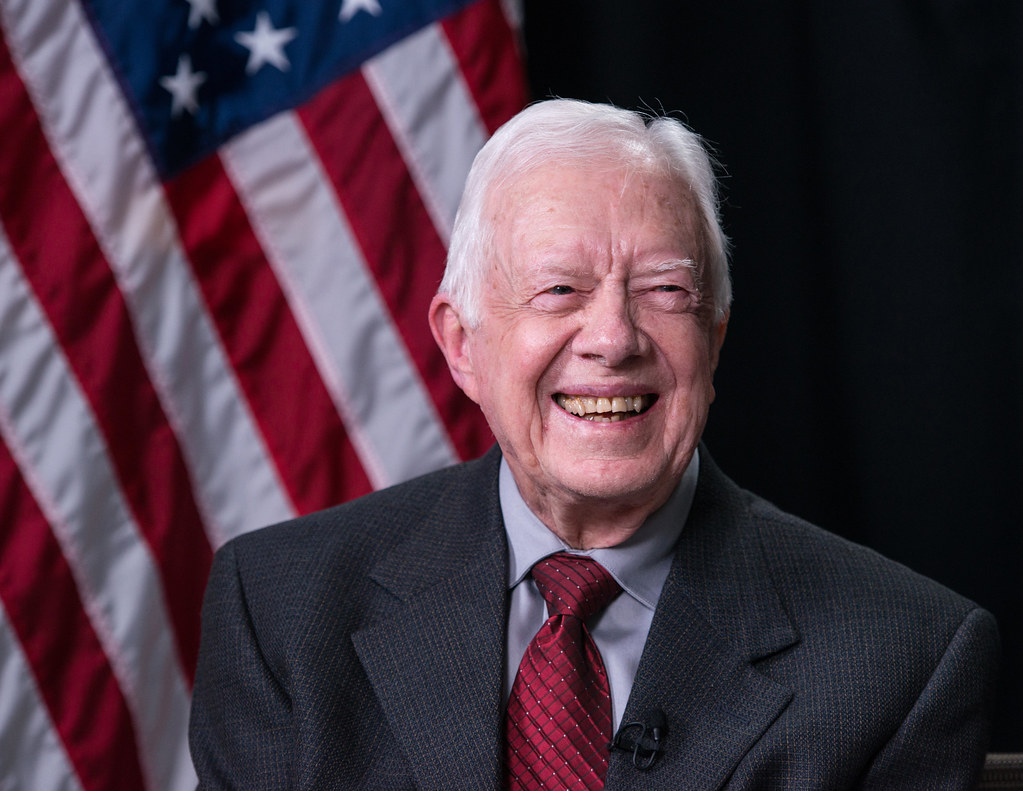
Carter’s 1976 presidential campaign emphasized honesty and a fresh approach, striking a chord with the electorate and leading to his electoral victory.
Presidency
During his presidency (1977–1981), Carter faced a range of domestic and international challenges. His administration prioritized energy conservation, environmental protection, and healthcare reforms. Notably, Carter brokered the Camp David Accords in 1978, a landmark peace agreement between Israel and Egypt. His presidency was also defined by managing the Iran Hostage Crisis, where 52 Americans were held hostage for 444 days, a significant event that impacted his administration’s public perception.
Carter’s leadership highlighted human rights and environmental stewardship, laying the foundation for future policies and global diplomatic efforts.
Philanthropic Work
After his presidency, Jimmy Carter devoted himself to global humanitarian work by founding The Carter Center in 1982. The Center focuses on advancing peace, democracy, human rights, and public health internationally. It has played a crucial role in election monitoring, combating neglected diseases such as Guinea worm disease and trachoma, and mediating conflicts worldwide.
Post-Presidency
In his post-presidential years, Carter has remained actively engaged in diplomacy and humanitarian causes. He continues to support peace negotiations, oversee election observations in emerging democracies, and champion vaccination campaigns and disease eradication programs through The Carter Center.

Legacy and Honors
Carter’s humanitarian work has earned him numerous prestigious awards, including the Nobel Peace Prize in 2002, recognizing his dedication to peace and conflict resolution. His influence touches politics, public health, and social justice, inspiring leaders worldwide.
Personal Life
Despite facing health challenges in his later years, Jimmy Carter remains engaged in public discourse, advocating for environmental conservation, human rights, and social equity. His longstanding marriage to Rosalynn Carter has been a defining partnership in his life and work.
Notable Achievements and Awards
Jimmy Carter’s distinguished career has been honored with multiple awards, including the 2002 Nobel Peace Prize, the Presidential Medal of Freedom, and a Grammy Award for Best Spoken Word Album. His leadership in diplomacy, humanitarianism, and authorship continues to be celebrated globally.
Legacy and Impact
Carter’s legacy transcends his presidency; his lifelong commitment to human rights, peacebuilding, and public health through The Carter Center has made a lasting global impact. His example inspires ongoing efforts in diplomacy, social justice, and humanitarian advocacy.
Read More: Hulk Hogan (Wiki): Hulk Hogan Age, Movies, Net Worth, Height, Career, Awards, And More Info
Conclusion
This Jimmy Carter wiki highlights a life characterized by public service, diplomacy, and humanitarian dedication. From his tenure as president to decades of global advocacy, Carter exemplifies compassionate leadership. His ongoing efforts demonstrate the power of empathy, diplomacy, and justice in shaping a better world.
If you are interested in exploring more, check out our insightful article on Kanye West Net Worth available in our dedicated Entertainment category.
FAQs
Yes, Jimmy Carter was the first and only U.S. president from Georgia.
Jimmy Carter served one term as president, from 1977 to 1981.
No, Jimmy Carter lost his re-election bid to Ronald Reagan in 1980.